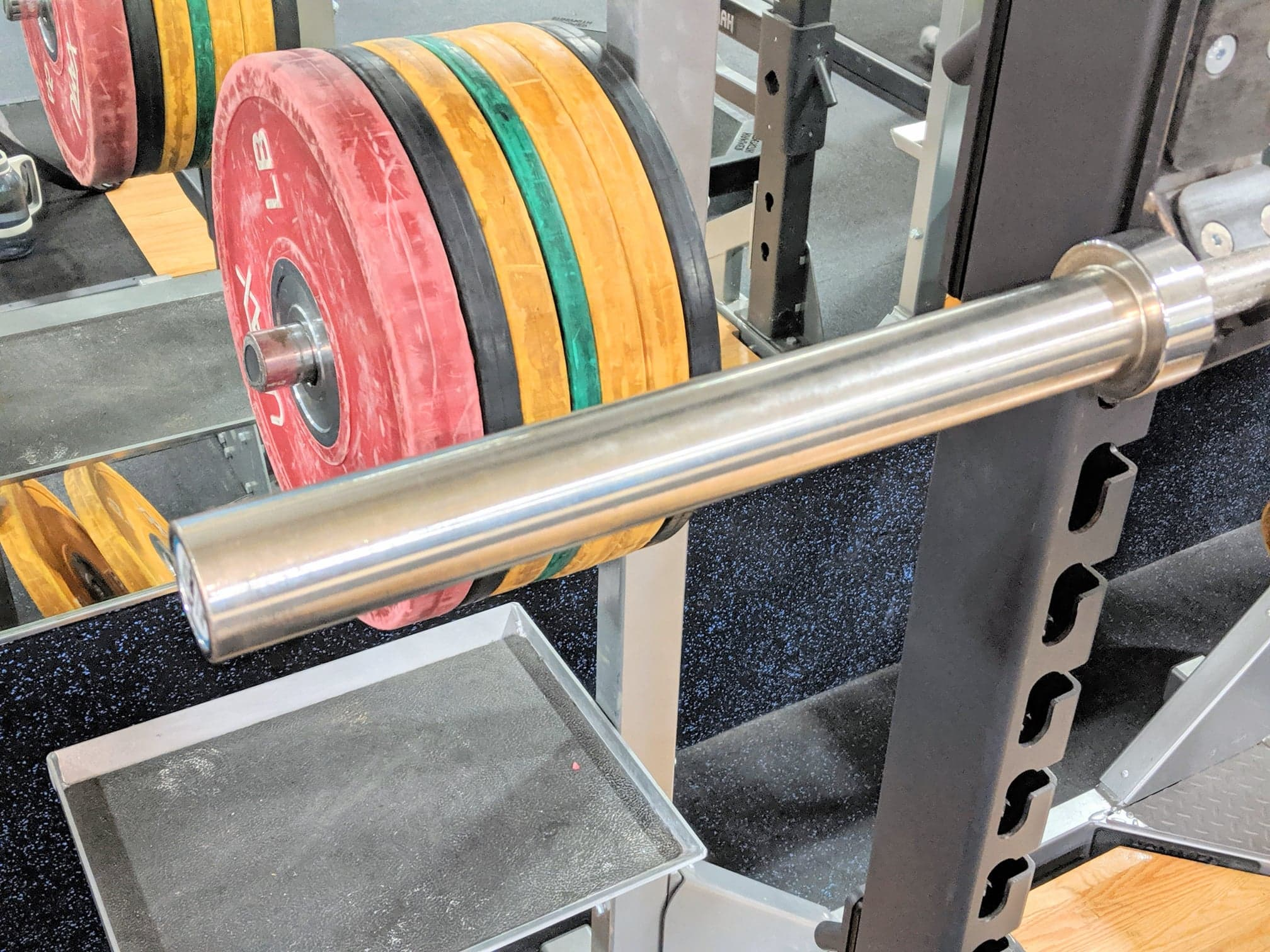
Ah the good ole barbell! Hands down one of the best tools in the gym for many free weight exercises. But did you know that this fantastic piece of metal also serves as a therapy tool as well? You may be wondering how a barbell can serve such a purpose, well, it’s actually very simple. If you are familiar with self-myofascial release, then you would know that this type of stretching is used to help correct existing muscle imbalances, reduce trigger points (knots within muscle) and inhibit overactive musculature. It can be used before exercise as well as after exercise.
Traditionally, self-myofascial release is performed using various types of therapy tools, such as a foam roller, or a therapy massage ball. Don’t get me wrong, these tools are wonderful, and I myself use them every time I visit the gym. But I realized that the barbell is actually more effective to use for the biceps, triceps, forearm muscles, and the shoulder muscles. If you ever tried to use a foam roller for the arms and shoulders, you may have found yourself in uncomfortable, awkward position with little pressure to stimulate the Golgi tendon organ, which is the goal.
Going back to the barbell, have you ever noticed that when you remove the weights from both sides that the ends are perfectly shaped to perform self-myofascial release? When the barbell is correctly positioned on the rack to the comfort of your height, you can easily place your biceps and triceps on the end, and begin applying gentle pressure to your knots. Well how about that! To adjust barbell on the rack for your biceps, simply remove the barbell hooks, and place them to a height where the barbell is parallel to your shoulders. All you need to do now is stand to the side of the end of the barbell, and hook your arms around it, and use your opposite hand to pull the arm down on the barbell end. Once positioned, then you can lean to the right or left while rolling your bicep to find the most tender spot, and hold for 30 seconds.
For your triceps and forearms, I’ve noticed that the barbell needs to be slightly lower to comfortably perform self-myofascial release. I found it best to position the barbell to the height of your lower chest area. Next, just simply stand in front of the barbell end and place triceps or forearms on top. Now in order to apply pressure from this angle, use the other hand and grab your wrist, and lean forward and backward looking for the knots. Once found, hold for 30 seconds on the most tender spots.
And lastly, the shoulders. Performing self-myofascial release for the shoulders is easier than the arms, and I think feels the greatest! Once again, the barbell should be on the rack parallel to your shoulders. All you need to do now is lift one end off the rack and place it on your shoulders. Roll until you find the knots and hold for 30 seconds.
Now that you’ve learned how to use the barbell to perform self-myofascial release for your biceps, triceps, forearms, and shoulders, give it a try the next time you visit the gym!
 Tyler's Fitness Tips